Sometimes a project doesn't start with a commission, but with a conversation with someone who has a vision, and that moment when you realize: I can build that.
The Birth of the Dragon Hut
One day, I was let in on the thoughts and visions for the future of our friend’s partner. The two of them were constantly planning new things to transform the place. It was in their nature, and it is their life’s work to devote themselves so fully to this place, to this project. We knew what we were capable of, so we brainstormed with all our might about a project that left a lasting impact.
Es ging um ein neues Gebäude. Ein Tiny House, um genau zu sein.
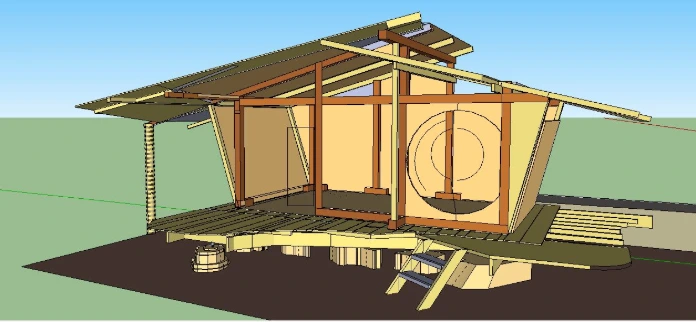
It was about a new building. A tiny house, to be exact. Since I was familiar with architectural software from my studies, among other things, we were able to put together something that felt right for us using a few references from the internet, which ultimately served as the foundation for further planning. There was a laptop—ha, how could it be otherwise—of course equipped with a program I was familiar with, namely SketchUp, and so, in regular consultation, I created the prototype for the so-called “Dragon Hut.” That was the start of our journey into this special project.
The Next Steps
What makes a project like this so special is clearly the fact that the distance between where the building materials come from and where they need to go is half a trip around the world. Because of the remote location—namely, the fact that we’re talking about an island that lies far out at sea—you have to rely on good equipment and adapt to the unique conditions. You have to take all these factors into account and factor them into your plans. On a smaller scale, I was already very familiar with such situations from my time working on construction trailers and festival projects. Our friend, who had known the local conditions inside and out for years, naturally knew exactly how to handle them. So I could only marvel and learn how differently people interact with one another in their own circles. As the saying goes: different countries, different customs.
The round-trip ferry ride alone took 5 hours. Ferries didn’t run back and forth constantly, either. So you had to rely on the time slots when we could run our errands. Even then, you have to think very carefully about what you need, where it is, and how long it will take. Without a local like our friend, you’re on your own.
We had a very rough estimate, plus the fact that a sawmill doesn't always automatically have certain types of lumber available in various thicknesses or lengths. That makes sense. But we got lucky and loaded the van as full as possible with lumber on our first trip.
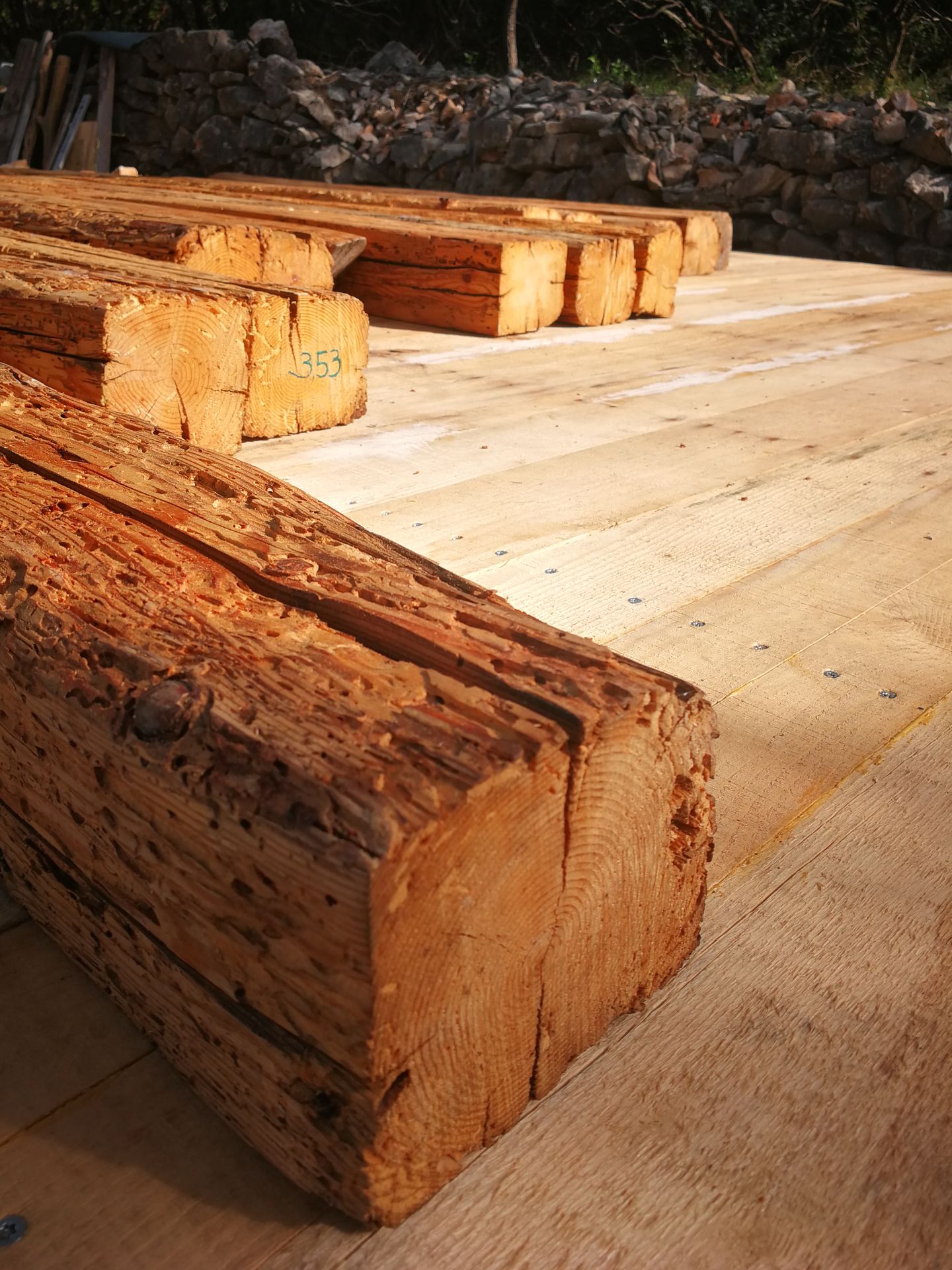
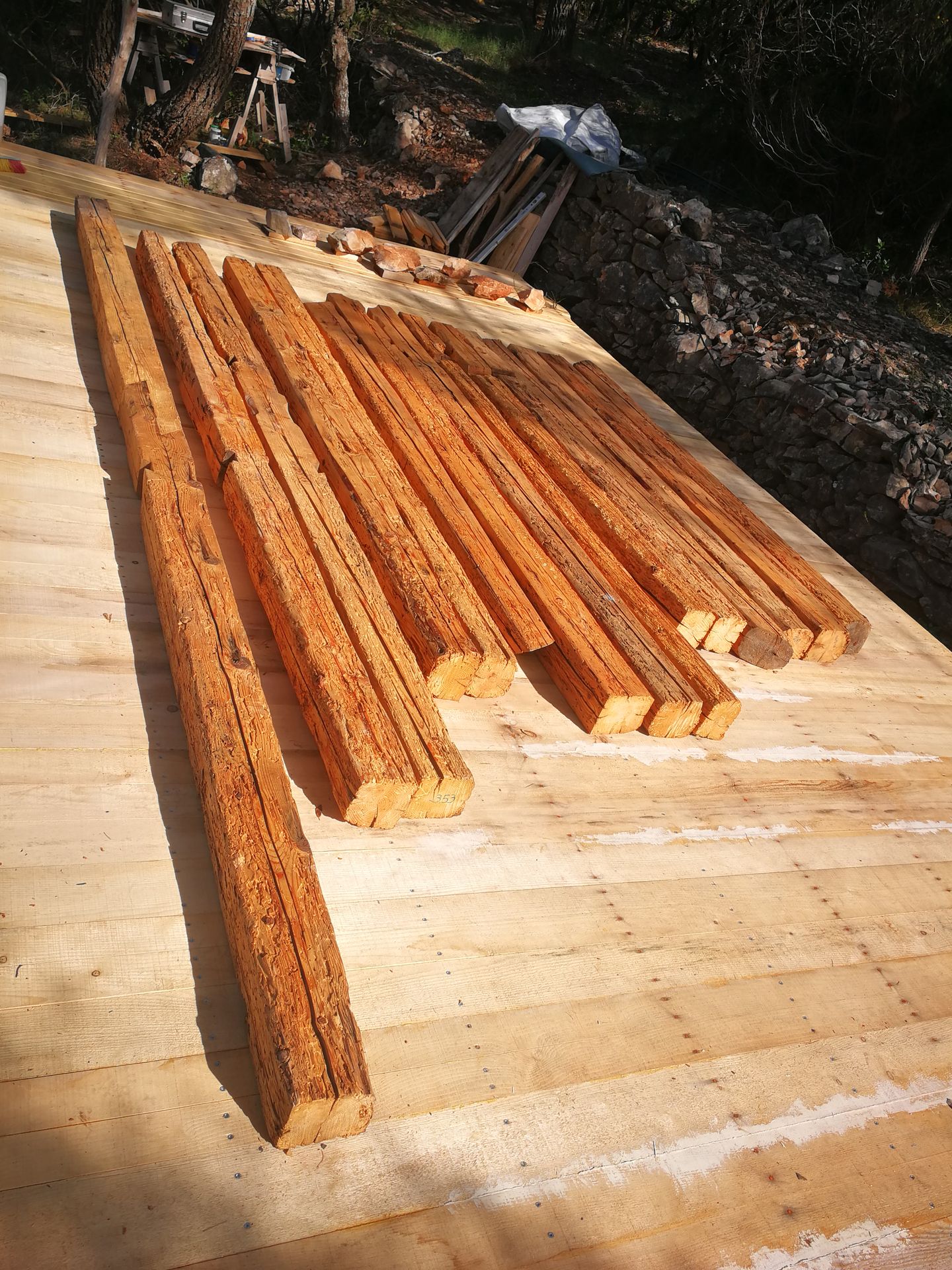
We spent the next few days unloading the timber and carrying it to the construction site. That fact alone, when taken as a whole, showed me once again - in a different way - just how important it is to stay focused.
The Foundation
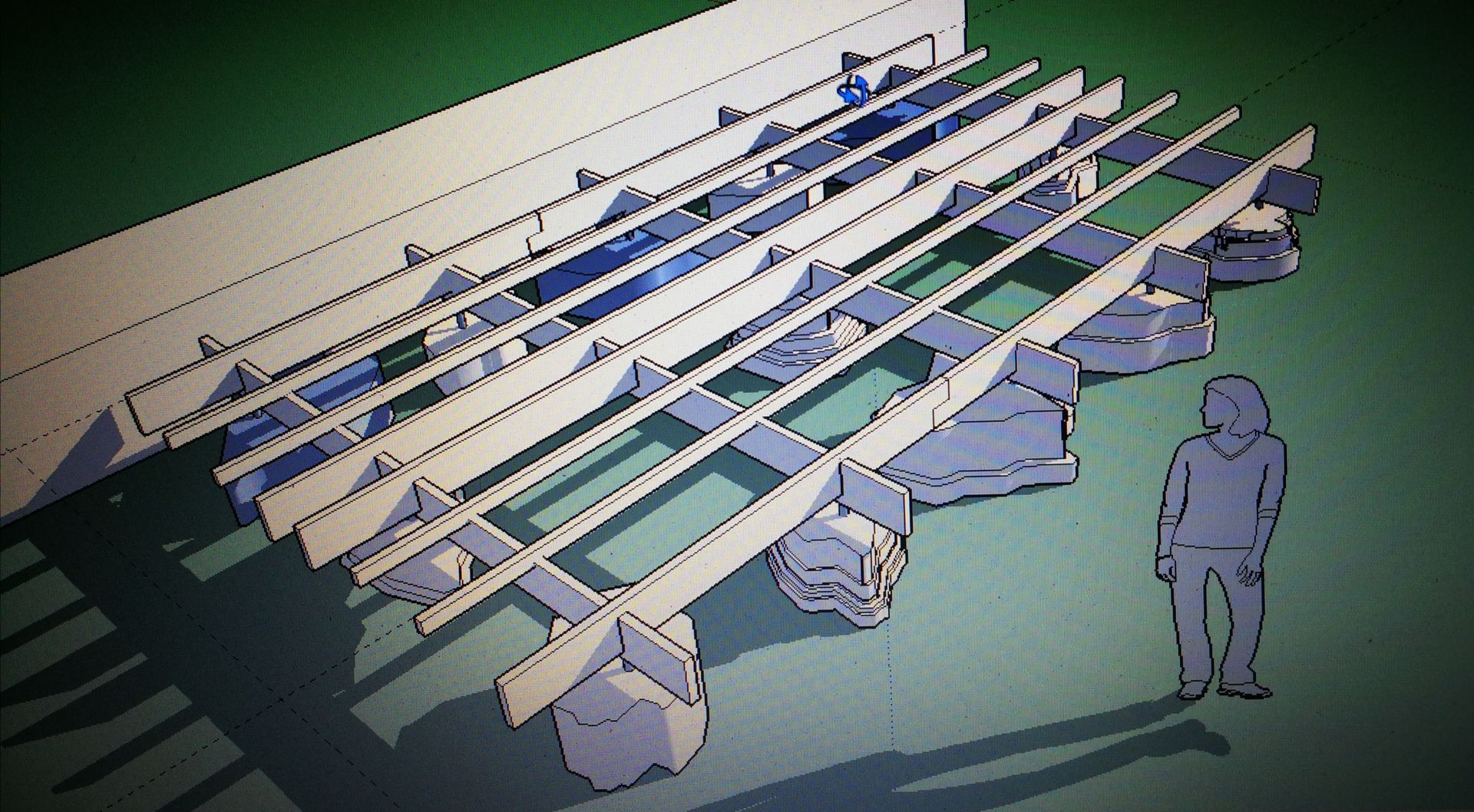
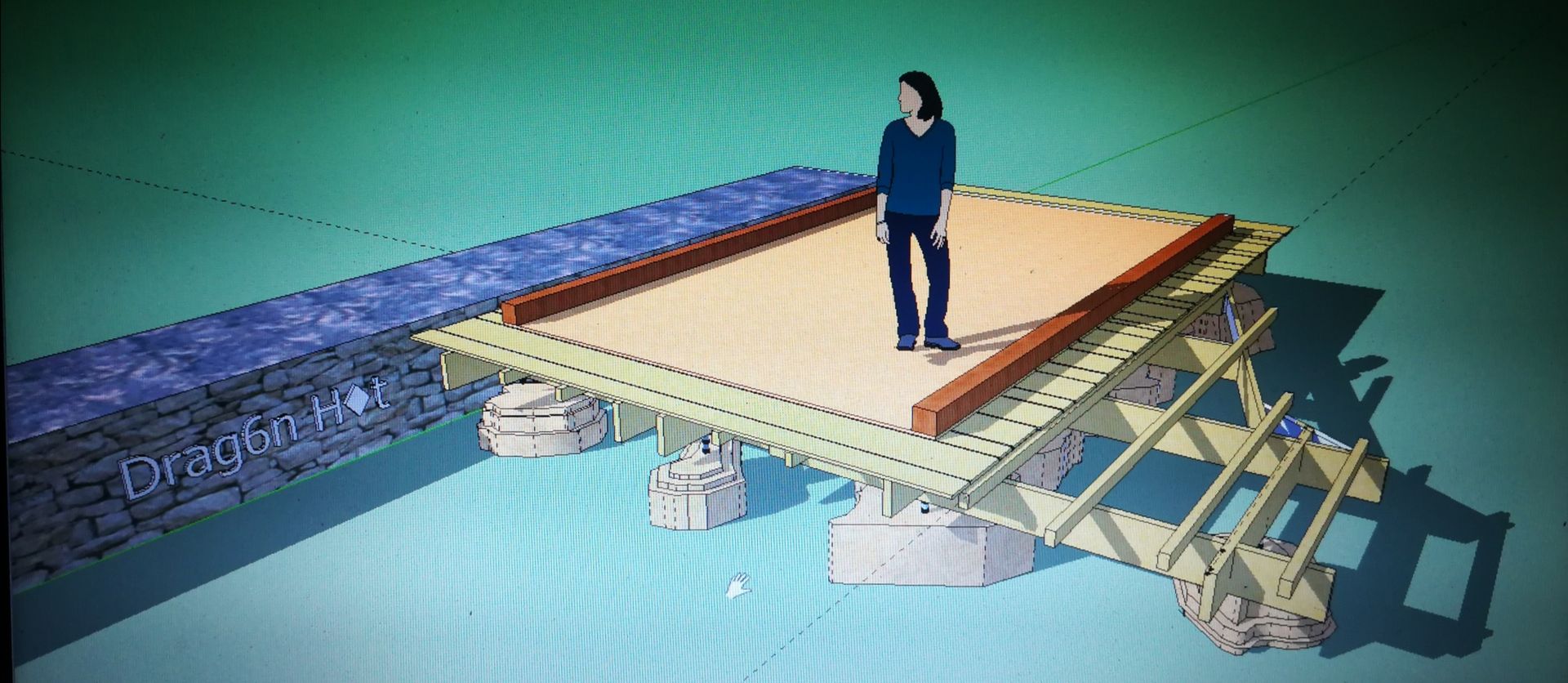
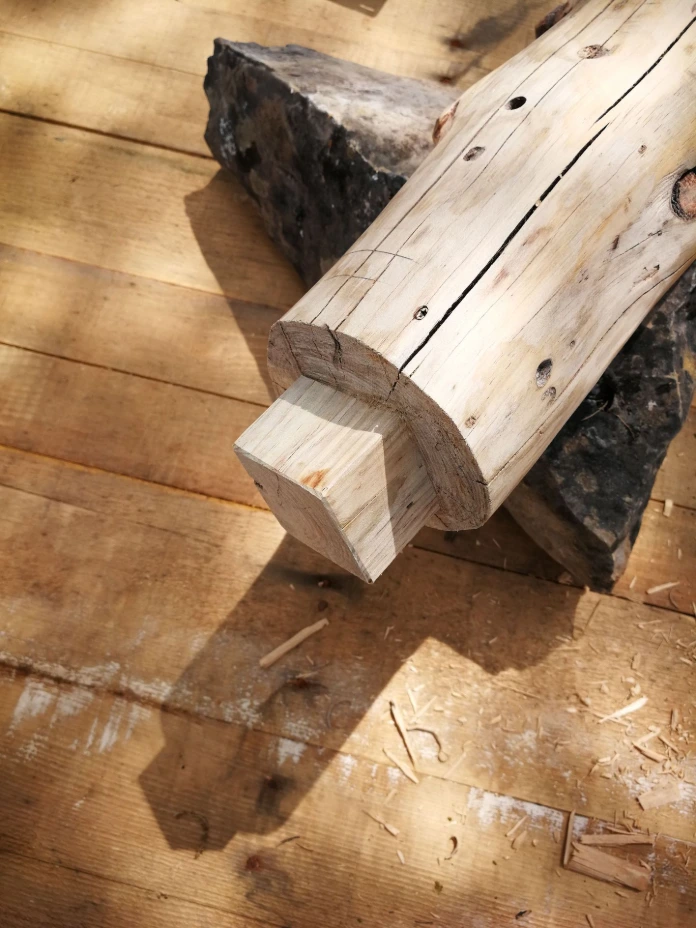
Back then, I came up with something special for the foundation. We already knew that we were talking about a tiny house that would stand on columns or stilts. So my suggestion was to place stones as foundation supports, drill a hole (as centered as possible) to create a socket, and have these elements collectively support the entire structure.
Where and how are steel beams manufactured?
There was a scrap yard that we visited from time to time. To us, it was like a hardware store, full of all kinds of angular scraps: beams, metal, various tools, and so on. So we collected scrap metal in the form of rebar and welded it onto 8-mm steel plates (using solar power). And just like that, our foundation beams and metal mounts were successfully created.
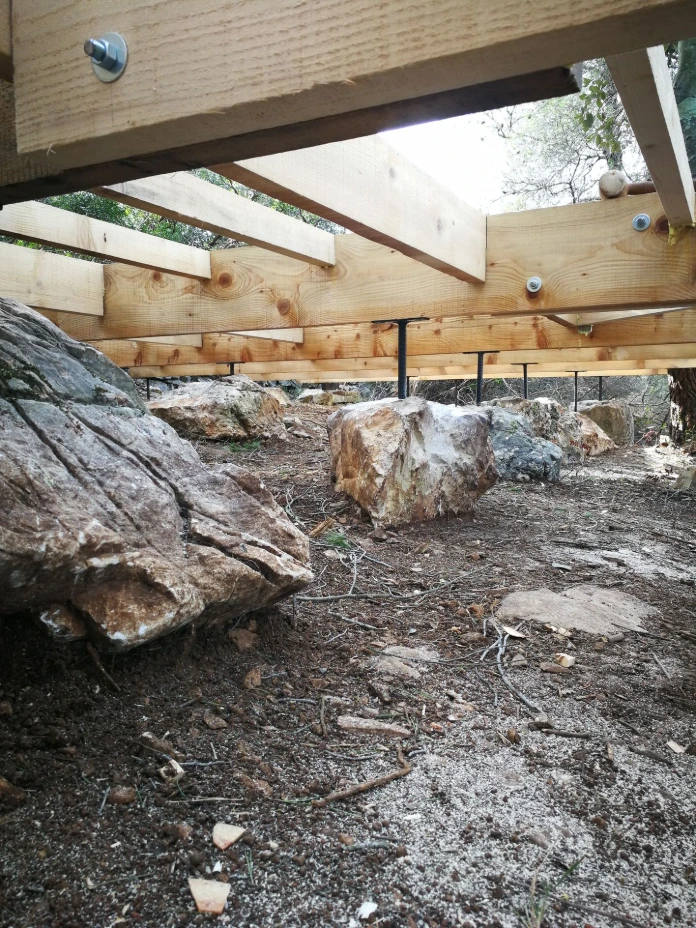
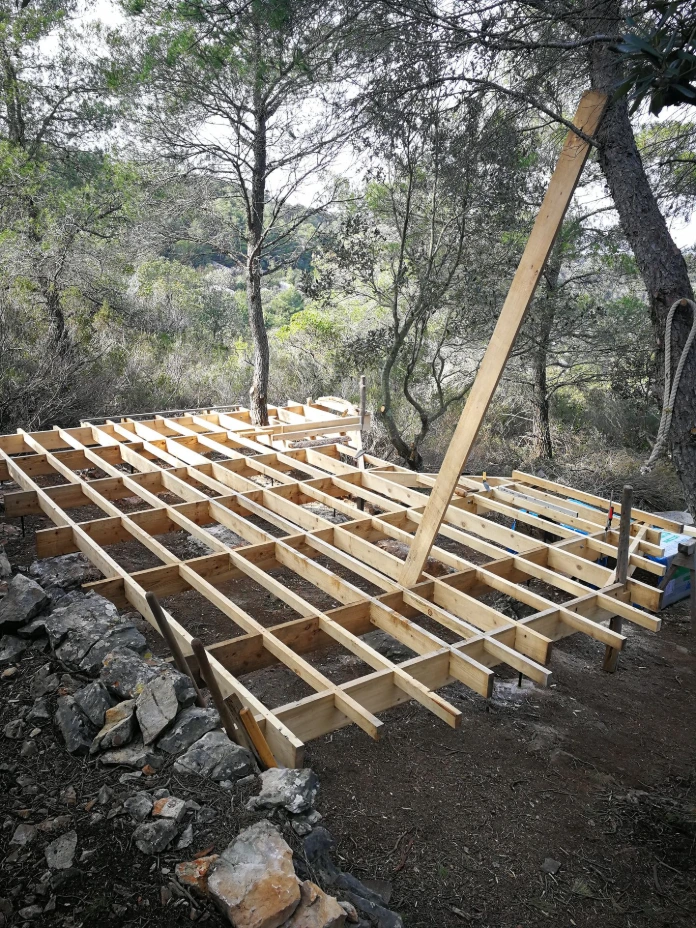
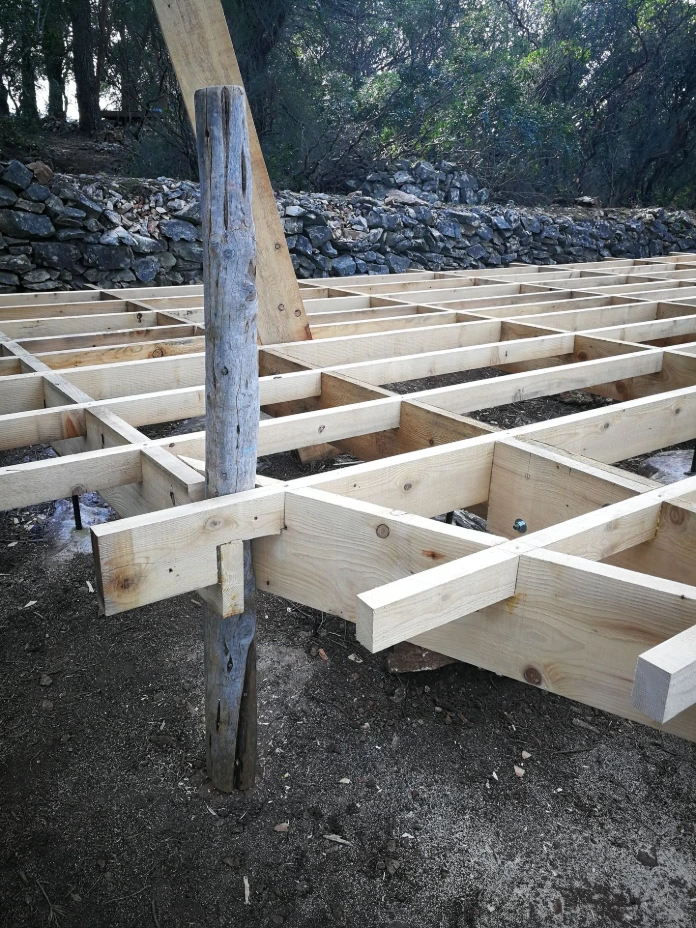
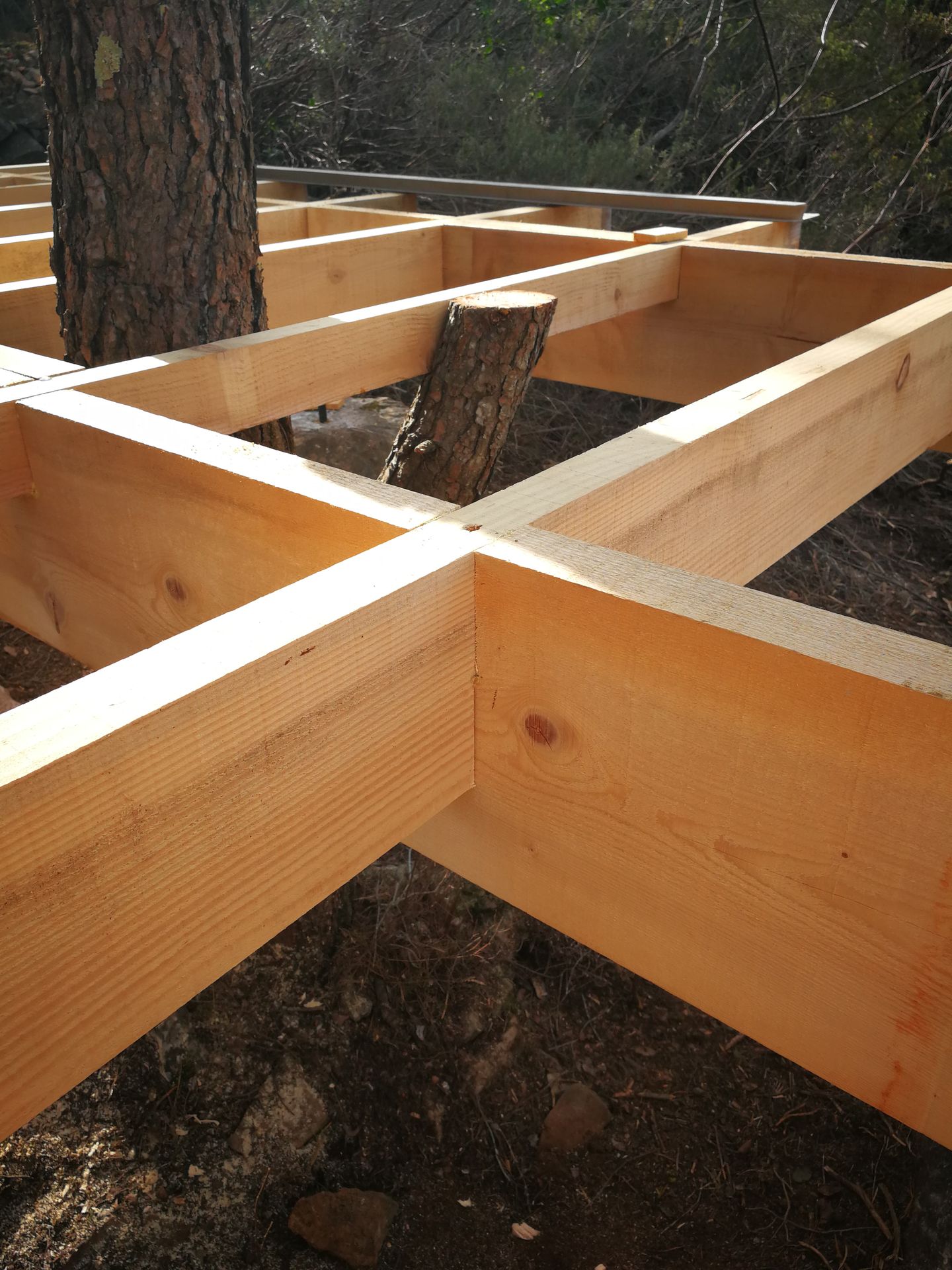
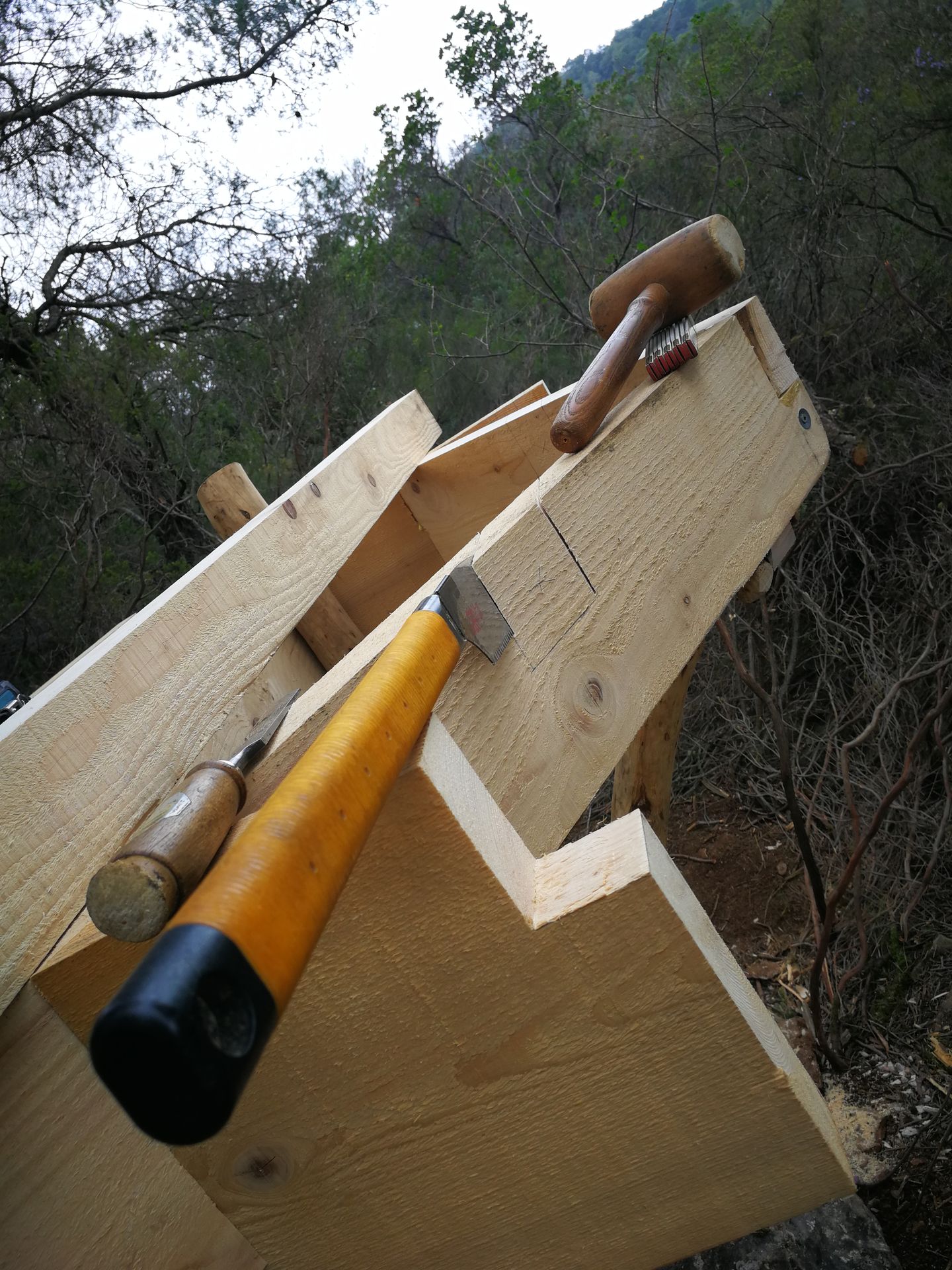
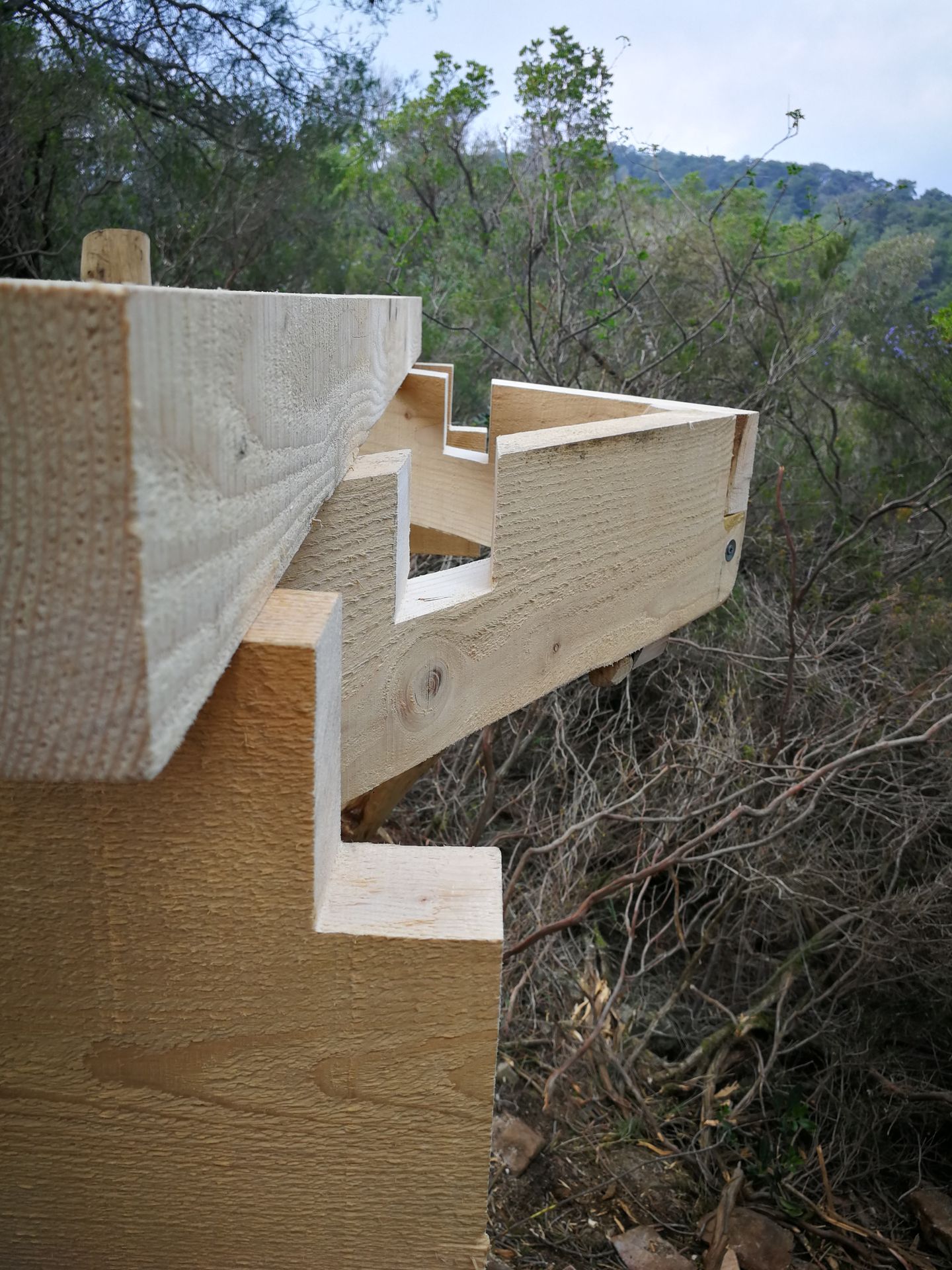
Another great thing was that there were already large stones in the area. However, getting them from point A to point B - especially with varying elevations and over rough terrain - was a whole other challenge that required us to improvise once again. The solution was a Euro-pallet sled with straps. We were able to tie this to the van and thus move the stones, at least for a relatively long distance, for the time being. For the last few meters (which were inaccessible without a car), the three of us took turns prying or rolling the stones into their final positions.
The Language of Nature
You know, as always, before we actually started building, I connected deeply with the site. It was peaceful, and in my mind’s eye I saw a large table with a few people celebrating. Children were laughing. It was joyful, and people were dancing. The potential was just right.
But that feeling wasn't limited to the atmosphere. It was also in the ground itself. Scattered throughout the area, as if they had been just waiting to be seen. So I knew exactly which stones would be the right ones. It was no coincidence.
The original idea for the foundation came from Japan, where I learned how to work with stones. That knowledge, combined with my intuition, laid the groundwork for everything that would follow.
I don’t think I need to mention that stones have a character of their own and that their placement isn’t random. The placement simply had to be just right, and it was equally important to correctly interpret the unique qualities of each stone. So, once again, it was about recognizing their individual potential. I lingered there for a long time and walked back and forth in the surrounding area. Everything was there. The stones were partially hidden among the bushes. It really took a lot of willpower to move the last one - the largest stone. Fortunately, it was only a few meters away, and a strong helper arrived just in time.
Nature Decides
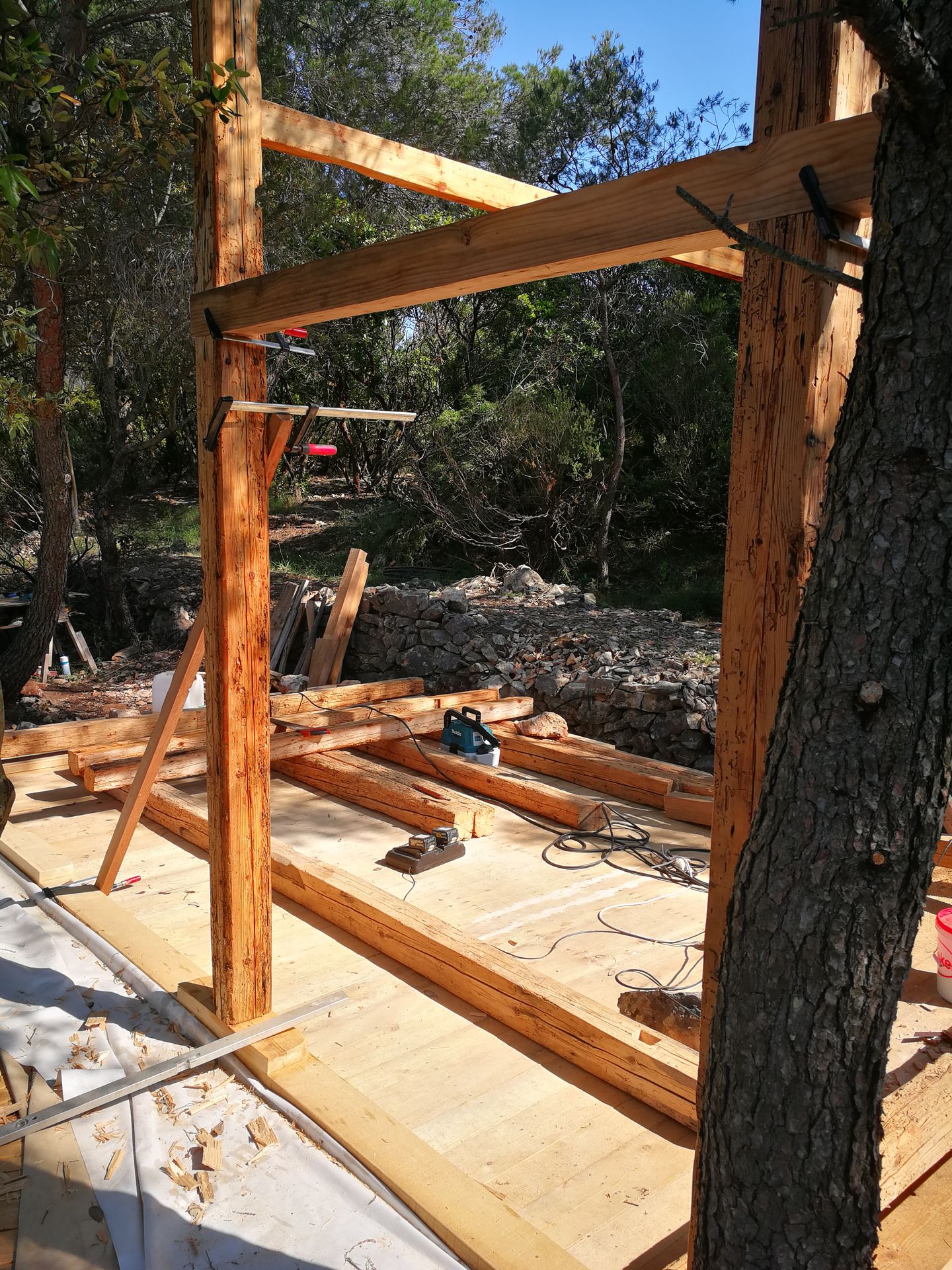
Everything was in place; the foundation was a success. Even the leveling went well after a few hours. Just a little fine-tuning here and there. We had a great time and got started on the wooden structure relatively quickly.
But then there was one particular night. It was so windy that night that a tree fell onto a trailer where guests were sleeping. Fortunately, no one was hurt. That very same day, the tree had to be removed from the trailer as quickly as possible, because it had left a hole and slightly damaged the exterior. While cutting back the tree, our friend fell off the ladder. He broke his heel in a rather complicated way when he landed. So he was unable to continue working for several weeks. I carried on anyway, though I was, of course, shocked.
That was, in the truest sense of the word, the breaking point in that dynamic. Something happened that night.
The guests left. They, too, were understandably a little shaken. After all, by a hair's breadth, the tree could have simply…
The days and weeks went by. Construction on Dragon Hut continued at my own pace. Here and there, we had guests and volunteers. Gradually, the fracture healed. I was still motivated, all the more so because the tiny house offered us the prospect of actually living there. We were definitely offered that opportunity - which was a huge gift. But my demons caught up with me. Somehow, the whole situation took a turn for the worse. Somehow, I realized that even here, as beautiful as everything was, the dynamic wasn’t right. We were slowly running out of money. Once again, I noticed a familiar pattern: the relationship between the definition of giving and taking. When codependencies and boundaries are crossed again, when you’re involved in an existing project with a lot of potential but where the boundaries blur - or perhaps there are unspoken expectations stemming from insecurity - then things just fall apart. The best thing we could have done was to distance ourselves. So we went our separate ways, packed everything back into the van, and stayed in different places with new friends we’d met on the island.
That wasn't running away - it was self-defense, and my intuition didn't let me down.
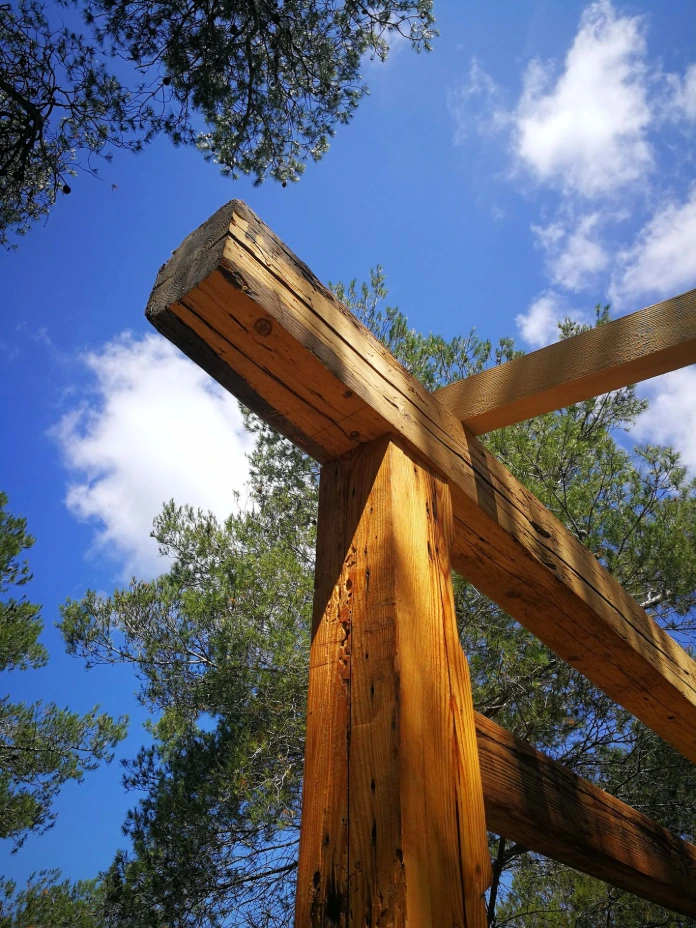
I stayed with Dragon Hut until the topping-out ceremony. Then it was time to let go. Take down the tents to set them up somewhere else. Once again, I found myself thinking with a smile: When will this restlessness ever end?
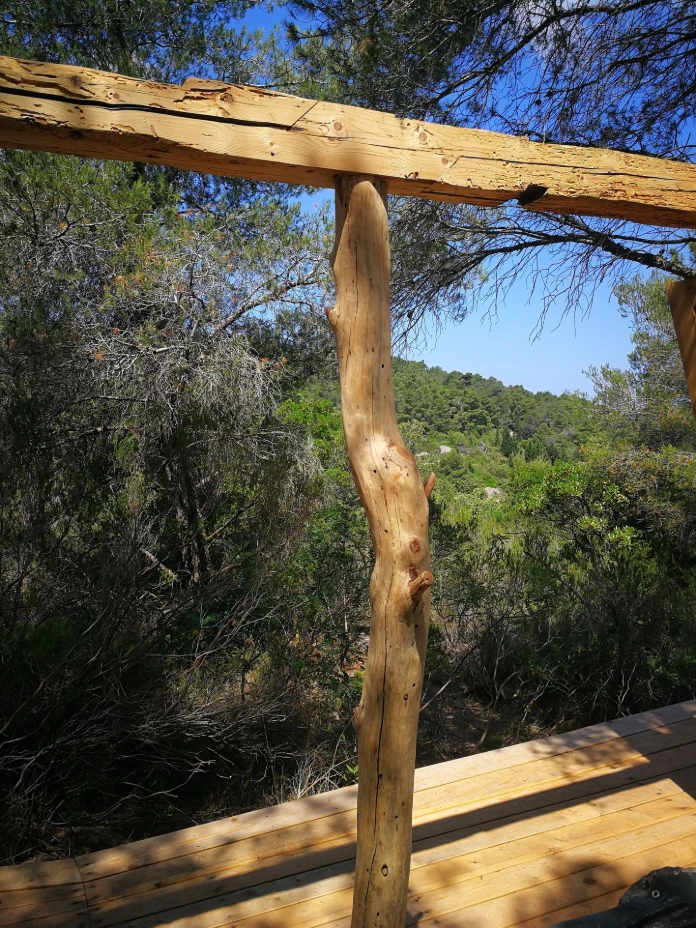
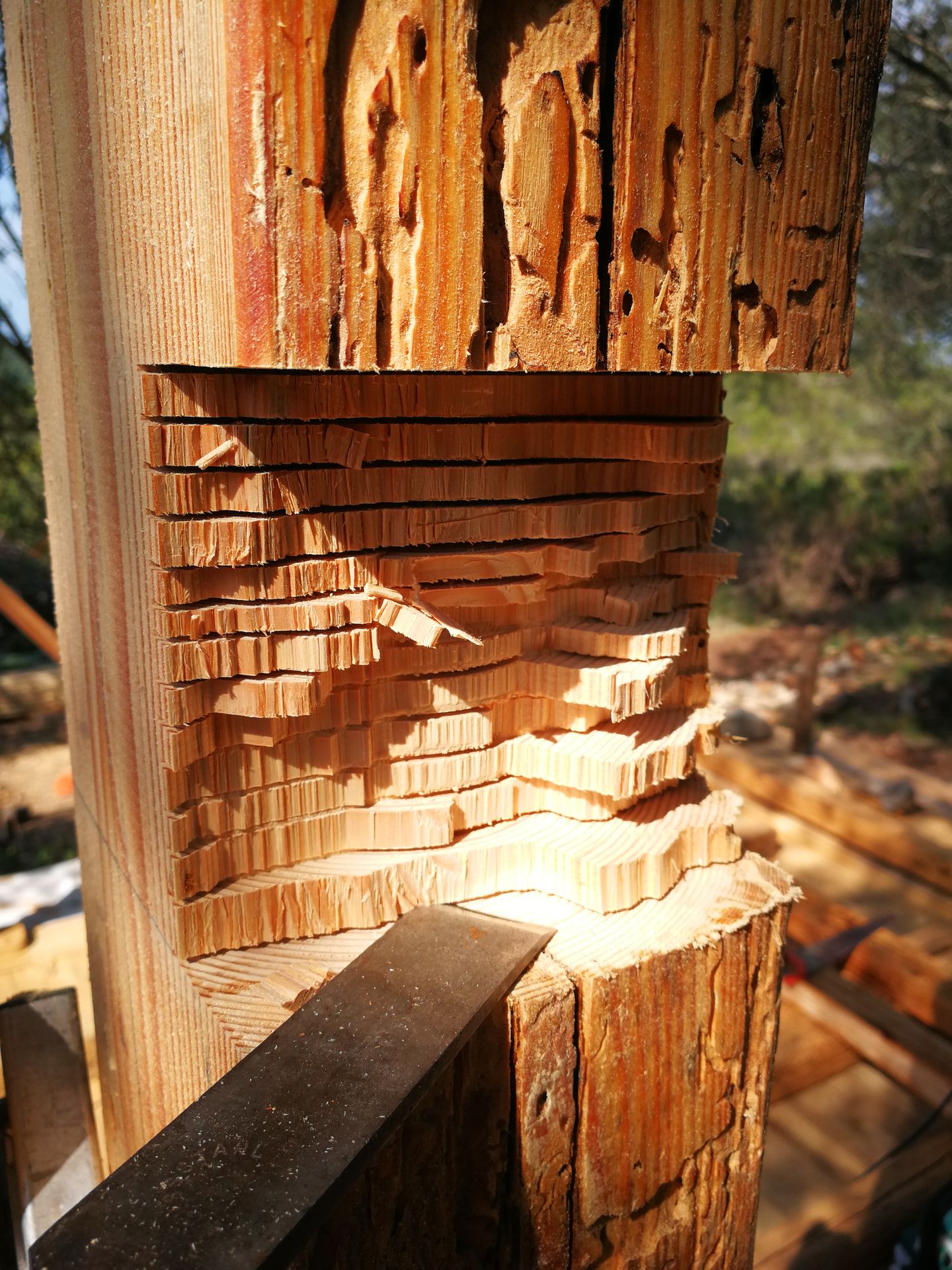
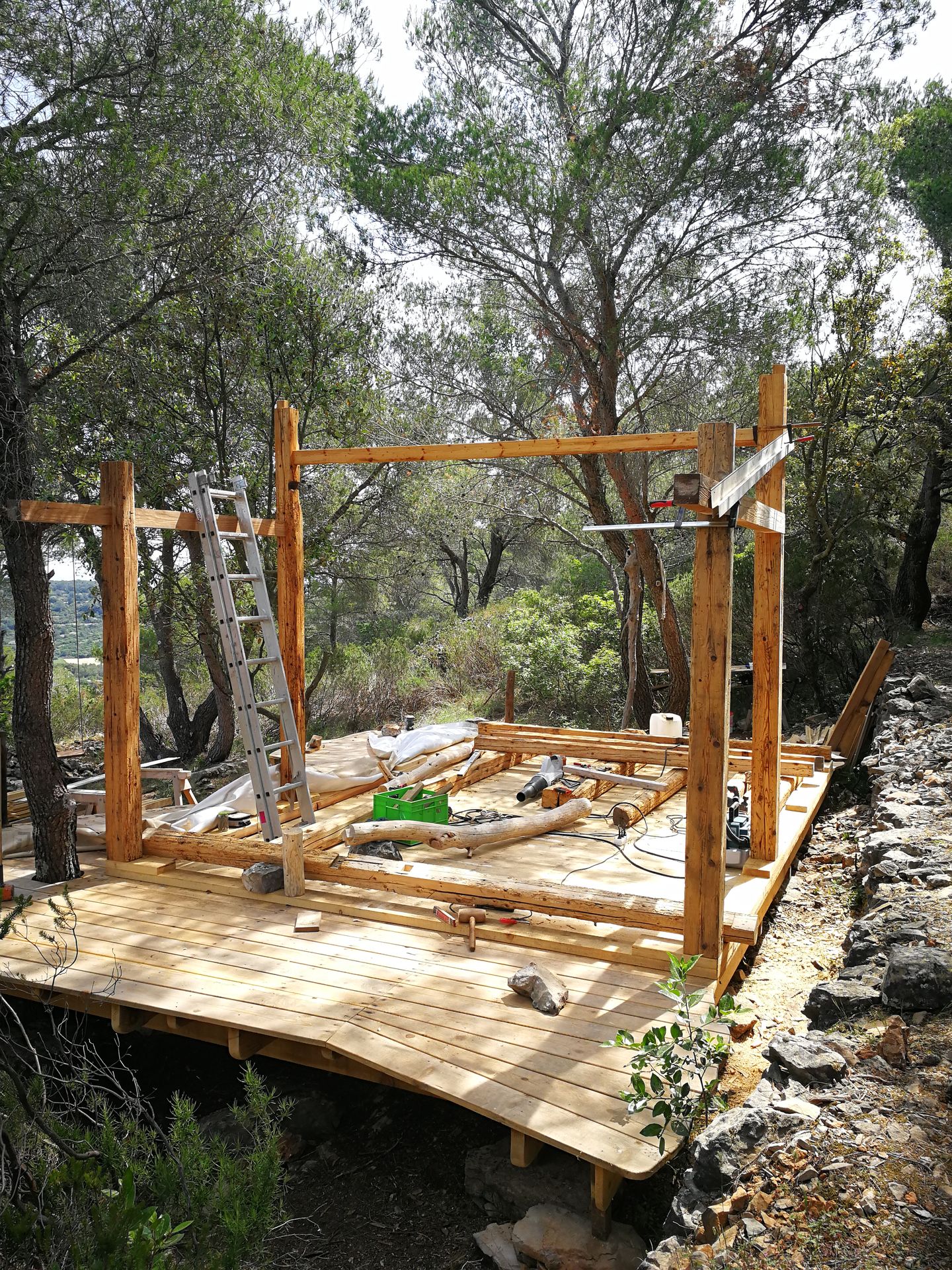
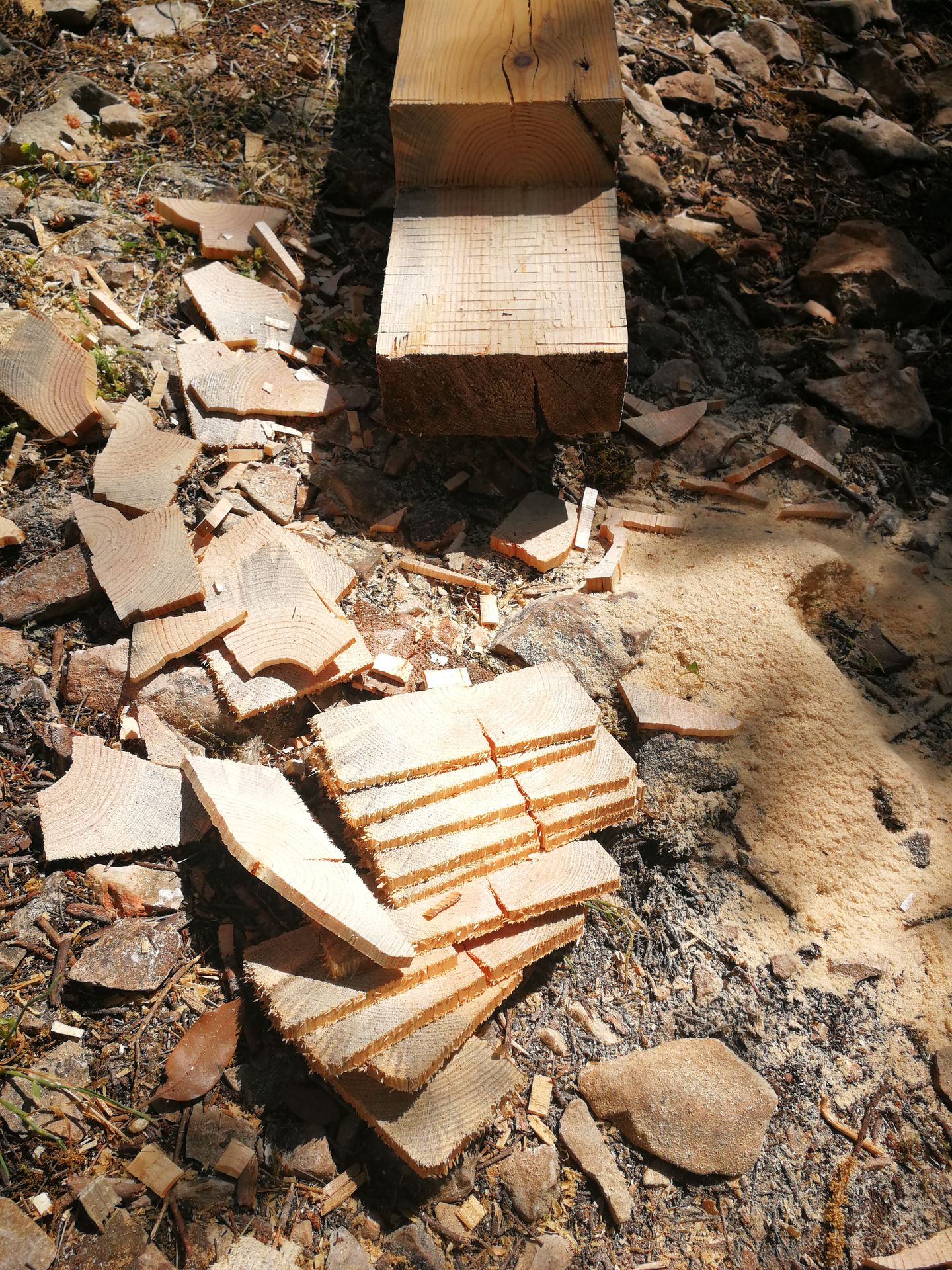
What I took with me
Dragon Hut was one of the most educational projects of my career so far. Not in spite of the setback, but precisely because of it.
Vertrauen ersetzt keine Vereinbarung.
Trust is no substitute for an agreement. No matter how close you are, no matter how much passion you put into it, clear, carefully discussed guidelines are not a sign of mistrust. They are a sign of respect - for yourself and for the other person.
A foundation will only truly support a structure if it is built correctly from the start.